
Sorry for the pun but if you don’t have good brakes you could be in for some bad breaks. The concept of the disc brake has been around since the late 1800s but was not used extensively in automobiles until the 1960s. Disc brakes were first used on the race track by Jaguar in the 1953 Le Mans where they exhibited superior stopping power and less fade under intense heat. So my Silver Hawk has drum brakes at the front and back. That was the standard set up for probably 99% of the cars on the road in 1957. But not today. Probably 100% of all new cars have Disc brakes on at least the front wheels. So when cruising at 60 MPH, well OK then 70, in the Silver Hawk you can be sure I am holding my breath at every intersection hoping the light doesn’t turn red. Just a normal stop in a modern vehicle today would have constituted floor stomping emergency braking in a 50s era vehicle. Now that is ok when everyone is in the same boat as far as braking power goes. Put on top of that the practice of some of wearing the shoes down to the rivets and it was just a different world back then as far as stopping goes. So I have pulled the hubs off of all 4 corners and there is adequate brake shoe and the wheel cylinders are all intact with no leaks. I also adjusted the brake shoes manually, which is the only way you can adjust them, and the car still pulls hard to the left while braking.
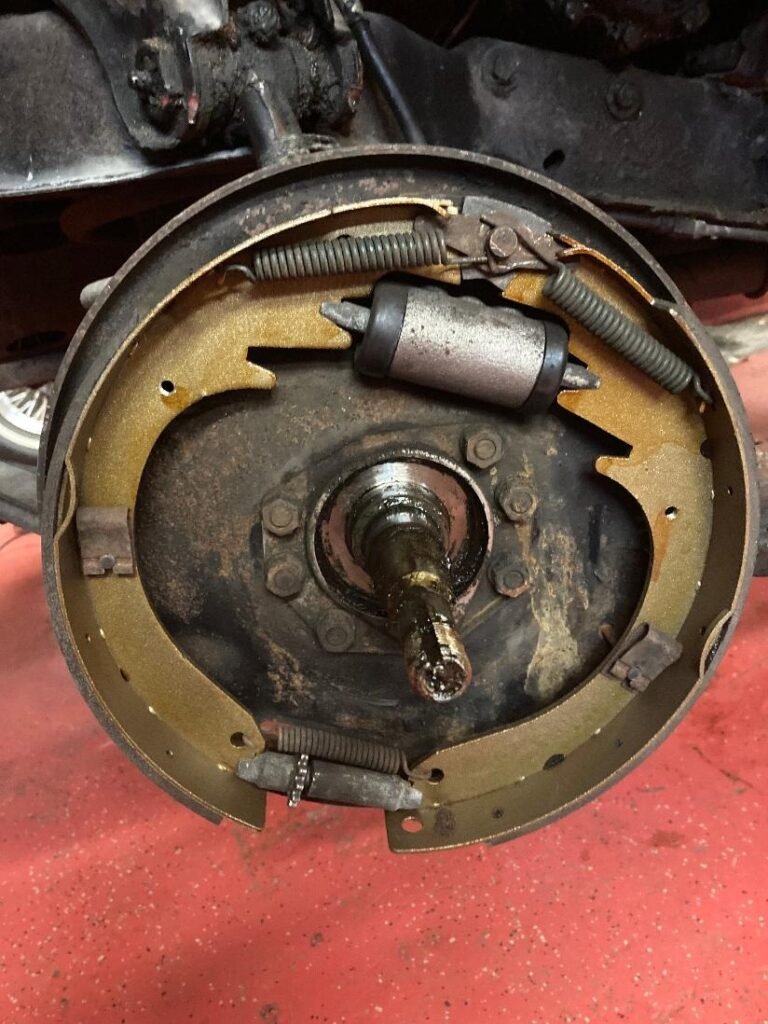
Current Brakes Appear to be in Good Shape
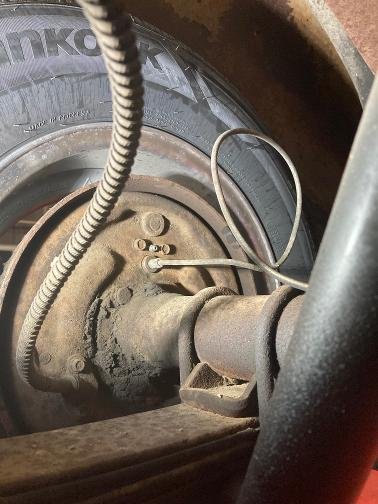
Brake Lines appear to be intact
Also another big safety issue is that the Silver Hawk has a single circuit brake master cylinder which was standard for the day. To make things worse it is located under the drivers side floor board. I guess the idea back then was “out of sight out of mind.” Yeah I think you would have to be out of your mind to drive around at break neck speed with only one circuit between you and certain death. If you get one bad leak you are on a one way sled ride to Hades! I like the idea of some back up. So I will be switching to a modern dual circuit master cylinder. So the next question is, where do I put it?
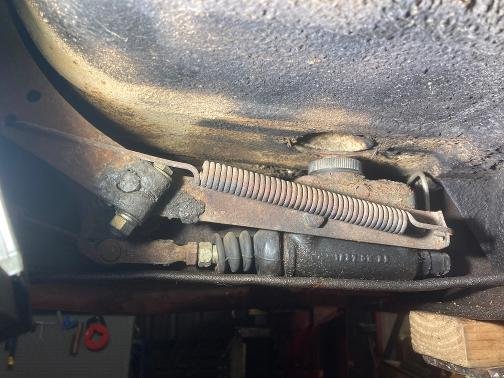
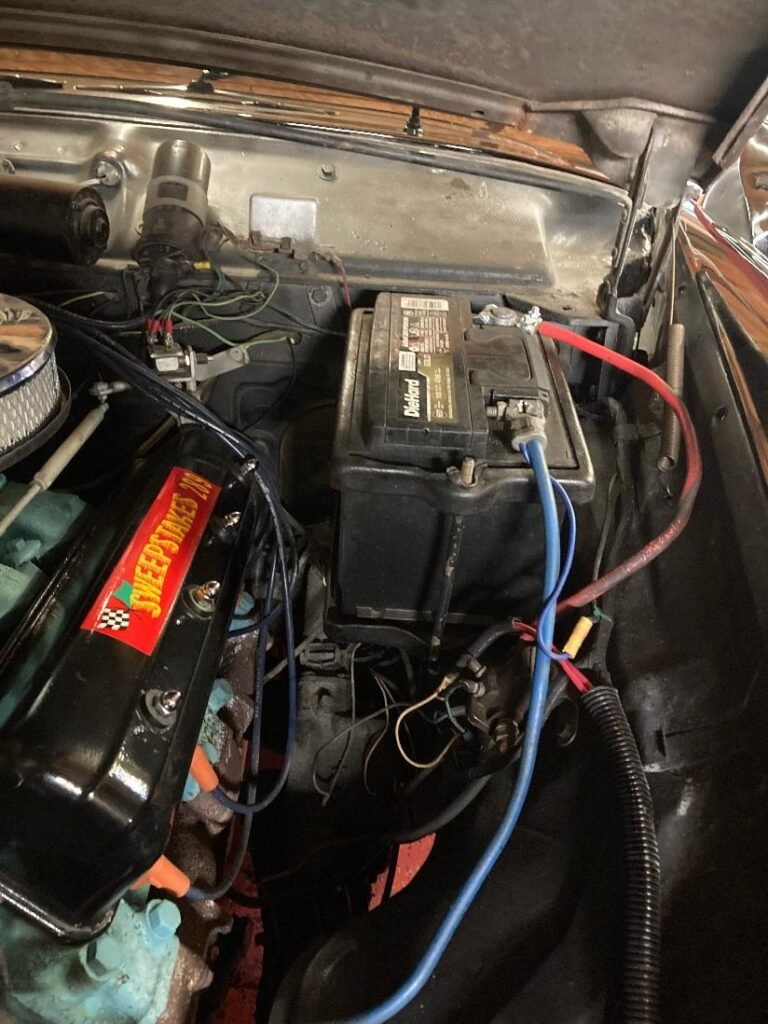
That Battery is Sitting Right Where the New Master Cylinder Needs to Go.
I consulted my new Pal Chat GPT to see what order he thinks the restoration should proceed in. The suggestion is to start at the wheels and work backwards. In other words, start with the outboard brake components, which is rotor size, caliper bore size which will determine master cylinder capacity and size which will work backwards and determine the correct pedal assembly and pedal ratio. So it becomes a process of finding who makes after market parts that will fit into a 1957 Silver Hawk and match those specifications to the next manufacturers requirements. It requires a lot of phone calls and research. Sort of like a puzzle where you have to search for the missing pieces that will fit and work properly with each other. It is not just a matter of asking Chat to spit out a list of parts and correct part numbers and where to order them. So I have to start at the end. To me it seems that stopping is the end. Stopping is more important than going. If you can’t stop, then you didn’t have any business getting going in the first place. So we start with the brakes. Hmmm. That sounds very counterintuitive to me. So it must be right!
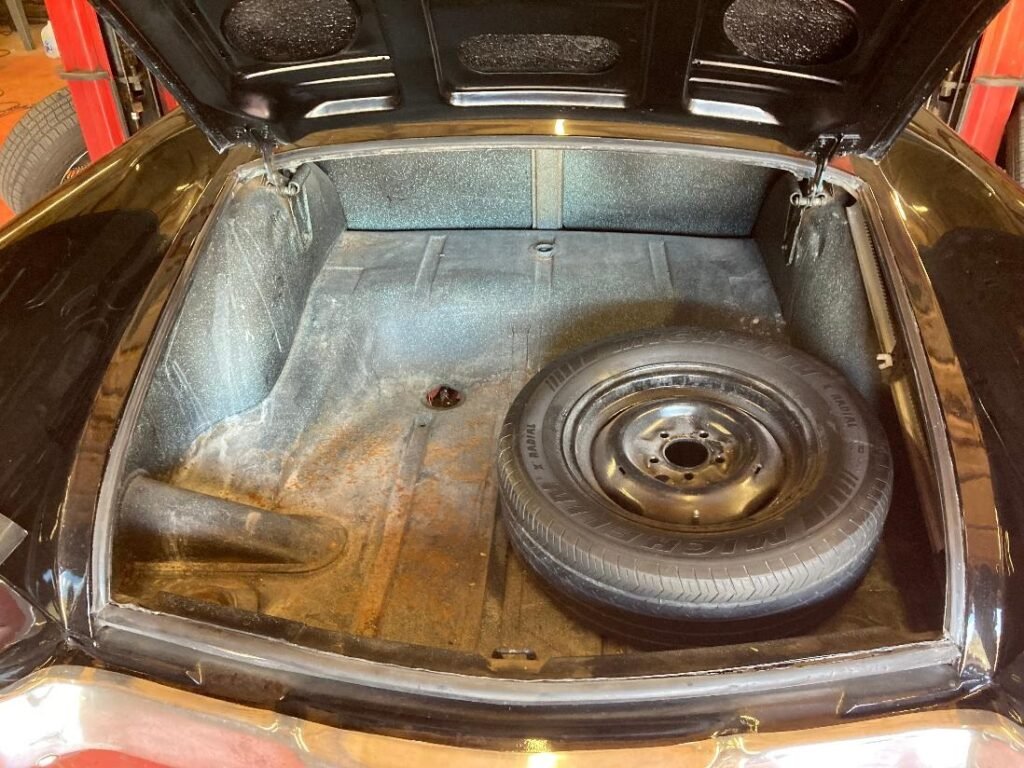
The Trunk Gets the Call For Battery Placement
But before I can get started on the brakes I need to move the battery to the trunk. But guess what? There are some RUST issues back here that will have to be addressed. It appears that at some point in the history of this car it must have sat out in the weather and water got past the trunk seal. Even the drip rail is rusted through in places. Someone tried fiberglassing over the rust in one corner. It actually looks pretty good from the inside but it is just sitting on top of rusted steel. What did you say? Lipstick on a pig? Yep. Let the fun begin.
